Our Vision
Stewarding the Land for Generations
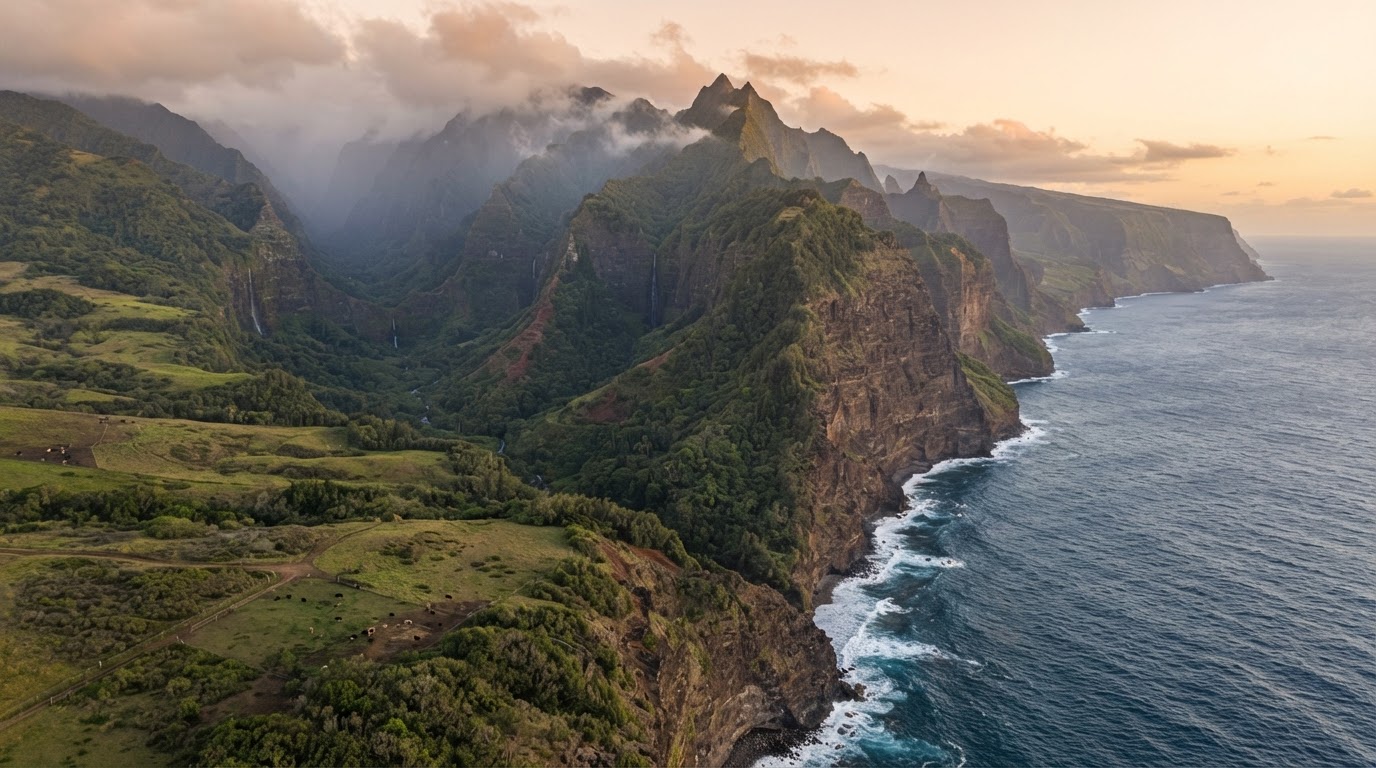
Seven interconnected visions for protecting, restoring, and responsibly caring for the lands of Molokaʻi — written as aspirations for the direction of the work, not promises of outcomes.
A proposed long-term community stewardship and acquisition initiative currently under development. No public financial participation program is currently being offered.
The Direction of the Work
A vision, not a guarantee
Each section below describes why an area matters, the challenge it faces, the long-term direction we hope to move in, and how the community could help shape and measure that work. Nothing here is a promise that any specific project or outcome will occur.
Responsible Stewardship
Caring for the land with accountability, transparency, and a horizon measured in generations rather than years.
Why It Matters
Land that is well stewarded sustains the people, the water, and the wildlife that depend on it. Responsible stewardship means making decisions today that the next generation will thank us for — not inherit a burden from.
The Challenge
Stewardship over tens of thousands of acres requires durable governance, dependable resources, and the trust of the community. Without transparent structures, even good intentions can fade over time.
Our Long-Term Vision
A permanent framework of accountable stewardship — open, community-informed, and built to outlast any single person or administration — that holds these lands in trust for the future.
Potential Projects
- A published stewardship plan developed with community input
- Open governance and decision-making records
- Long-term stewardship agreements with conservation partners
How Progress Could Be Measured
- Number of community-informed stewardship decisions documented
- Public availability of plans, minutes, and reports
- Continuity of governance across leadership transitions
How the Community Can Participate
Residents, kūpuna, and practitioners help shape stewardship priorities through public meetings, working groups, and open comment periods.
Cultural Preservation
Honoring the places, stories, and traditional knowledge that connect the people of Molokaʻi to this land.
Why It Matters
Cultural places are not relics — they are living connections between kūpuna and keiki. Protecting them preserves identity, memory, and the practices that give the land its meaning.
The Challenge
Cultural sites can be fragile, poorly documented, or at risk from erosion, access, and changing land use. Preservation must be guided by those who carry the knowledge, not imposed from outside.
Our Long-Term Vision
Cultural places respected and protected, with traditional knowledge carried forward by practitioners and elders in partnership with the initiative.
Potential Projects
- Cultural site surveys guided by community and practitioners
- Oral history and place-name documentation projects
- Protocol and access guidelines developed with kūpuna
How Progress Could Be Measured
- Cultural resources identified and protected with community guidance
- Documented engagement with practitioners and descendants
- Access and protocol guidelines in place where appropriate
How the Community Can Participate
Cultural practitioners, lineal descendants, and kūpuna lead the identification of priorities. The initiative listens before it acts.
Native Forest Restoration
Helping native forests — koa, ʻiliahi, and the understory that holds the watershed — return to slopes where they once thrived.
Why It Matters
Native forests anchor the soil, capture moisture, and shelter species found nowhere else. When they recover, the whole living system beneath them has a chance to recover too.
The Challenge
Native forests recover slowly. Decades of pressure from invasive species, grazing, and fire have left many slopes degraded, and restoration work is labor-intensive and long-term.
Our Long-Term Vision
Expanding stands of native forest on suitable slopes, with a recovering understory and the conditions for native species to re-establish on their own.
Potential Projects
- Native plant nurseries propagating koa and ʻiliahi
- Strategic reforestation of priority slopes
- Protection of remaining native forest fragments
How Progress Could Be Measured
- Acres of native forest under active restoration
- Survival rates of planted native seedlings over time
- Observed recovery of native understory where monitored
How the Community Can Participate
Volunteers, schools, and conservation crews join planting and nursery days; practitioners help select culturally appropriate species and sites.
Sustainable Agriculture
Supporting working lands and food systems that feed the island without depleting the soil or the water.
Why It Matters
Molokaʻi has a long relationship with working land. Agriculture done well can feed people, sustain livelihoods, and keep soil healthy for the next season.
The Challenge
Balancing productive use with long-term soil and water health is difficult. Past practices have, in places, left soil depleted and water systems stressed.
Our Long-Term Vision
Working lands that produce food and opportunity while rebuilding soil, conserving water, and respecting the limits of the ʻāina.
Potential Projects
- Soil-health and regenerative practice pilots
- Local food production supporting island residents
- Agroforestry integrating native trees with crops
How Progress Could Be Measured
- Soil-health indicators tracked over time
- Local food produced through supported projects
- Water use reviewed against sustainable limits
How the Community Can Participate
Farmers, ranchers, and residents help define what sustainable production looks like on Molokaʻi and where it should happen.
Watershed Protection
Safeguarding the forests, streams, and aquifers that collect and carry Molokaʻi's fresh water.
Why It Matters
Fresh water on an island is finite and fragile. What happens on the ridges determines what flows to the streams, the aquifers, and the communities below.
The Challenge
Degraded uplands absorb less water and shed more sediment. Invasive plants, bare soil, and erosion can reduce recharge and harm stream health downstream.
Our Long-Term Vision
Healthy uplands that capture rainfall, streams that run cleaner, and aquifers recharged reliably for the communities that depend on them.
Potential Projects
- Upland fencing and protection of priority watershed areas
- Stream monitoring and sediment reduction
- Revegetation of eroding slopes
How Progress Could Be Measured
- Area of watershed under active protection
- Stream and water-quality observations over time
- Reduction in visible erosion on treated slopes
How the Community Can Participate
Residents help monitor streams and report changes; partners contribute technical capacity and field crews.
Economic Opportunity
Creating dignified, community-centered livelihoods rooted in the care of the land — not extraction from it.
Why It Matters
Stewardship that lasts needs people who can afford to stay and do the work. Opportunity tied to caring for the ʻāina can keep families rooted and skills alive.
The Challenge
Many conservation roles are short-term or grant-funded. Building durable livelihoods requires patient investment, training, and work that the community values.
Our Long-Term Vision
A local workforce skilled in restoration, monitoring, and land management — with opportunities that allow families to remain on Molokaʻi.
Potential Projects
- Conservation workforce training and apprenticeships
- Stewardship-related enterprise and small-scale production
- Partnerships with schools and local organizations
How Progress Could Be Measured
- Local jobs and training placements supported
- Workforce skills developed in restoration and monitoring
- Community-supported enterprises launched
How the Community Can Participate
Residents help identify the kinds of work and enterprise that fit Molokaʻi, and help train the next generation of stewards.
Future Generations
Building transparent, accountable structures designed to endure long beyond any single lifetime.
Why It Matters
The true measure of stewardship is whether the land — and the community's relationship to it — is healthier a generation from now than it is today.
The Challenge
Structures outlast people only when they are well designed, well governed, and trusted. Without that, even strong beginnings can unravel over decades.
Our Long-Term Vision
Governance and stewardship structures durable enough to protect these lands for generations, with the community holding a lasting role in their direction.
Potential Projects
- Governance documents designed for long-term continuity
- Intergenerational programs connecting kūpuna and keiki
- Enduring community oversight and participation channels
How Progress Could Be Measured
- Governance structures maintained across transitions
- Intergenerational programs active and documented
- Community oversight channels in regular use
How the Community Can Participate
Youth, families, and elders help shape what 'for future generations' actually means in practice, and hold the work accountable to it.
Lōkahi — balance between land, people, and spirit
These seven visions are connected. A restored forest protects the watershed; a healthy watershed sustains agriculture; a thriving community carries the work forward. True stewardship seeks harmony across all of them.
Important Notice
The visions and potential projects described here are aspirational and informational only. They are not promises, guarantees, or commitments that any specific project, outcome, or acquisition will occur. This is a proposed long-term community stewardship and acquisition initiative currently under development. No public financial participation program is currently being offered.